Why Renovation Plans Deserve an Insurance Review
A renovation can change the amount it would take to rebuild a home, even when the work seems like a modest upgrade. In Galveston, adding a bedroom, enclosing a porch, replacing a roof, or rebuilding after storm damage can affect both the home’s features and its coastal risk profile. Dwelling coverage is generally intended to insure the structure, subject to policy terms and limits; it is not automatically adjusted every time construction is completed. Before work starts, tell the insurer or a licensed insurance professional what is planned. Afterward, confirm that the home details and dwelling limit still reflect the finished property.
How Dwelling Limits Relate to Rebuilding Cost
A dwelling limit is not necessarily the same as a home’s market value, purchase price, or assessed value. Replacement cost estimates typically consider factors such as square footage, construction type, finish quality, roof design, and local labor and material costs. A custom kitchen or a new bathroom may increase the amount and quality of materials needed to reconstruct the home. An addition also increases the area that might need rebuilding. Coastal construction costs and availability can shift over time, so a limit that once seemed adequate may need another look. Ask how the estimate was developed and whether the policy settles covered structural losses on a replacement-cost or actual-cash-value basis.
Tell the Insurer About Additions and Major Changes
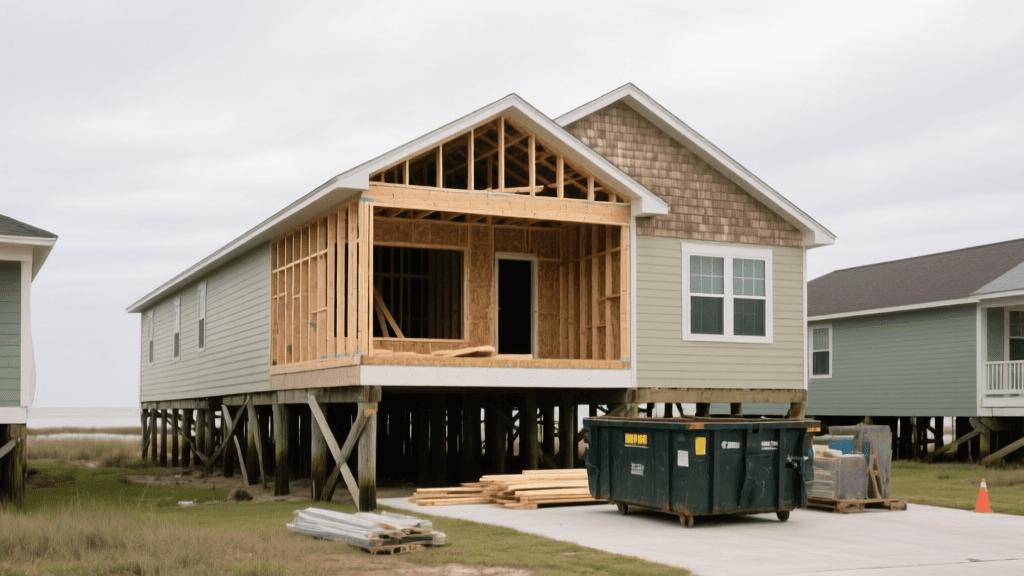
A new room, converted garage, enclosed porch, or expanded living area changes the home’s footprint and may add plumbing, electrical systems, windows, or built-in equipment. Share the project scope, approximate square footage, construction materials, and expected completion date. Ask whether the home remains insured as expected while contractors are working and whether a separate builders risk or course-of-construction policy should be considered. Requirements differ by insurer and project. For example, converting an open Galveston porch into conditioned living space may involve changes beyond the walls, including insulation and mechanical systems. Keep permits, plans, invoices, and contractor details together so the finished work can be accurately described during a coverage review.
Roof Replacement and Coastal Materials Matter
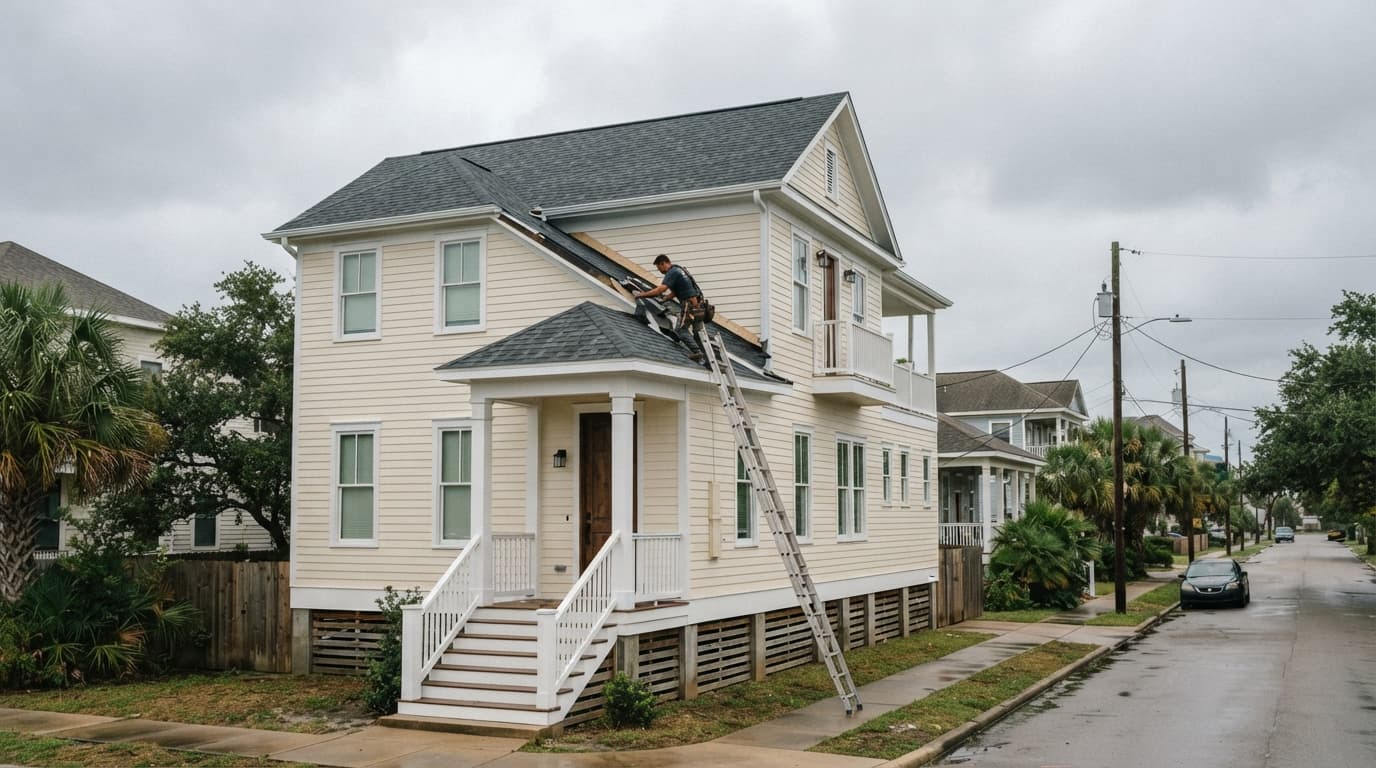
A roof replacement can affect how an insurer evaluates a home, but a new roof does not automatically guarantee a lower premium or broader coverage. In a coastal location such as Galveston, the roof’s age, material, installation quality, and wind-related features may be important underwriting details. Save the contract, permit information where applicable, product specifications, and completion date. Ask whether the insurer needs photographs, an inspection, or other proof to update its records. If the project changes roof shape, decking, or ventilation, mention those details too. Similar documentation is useful after replacing windows, exterior doors, or siding, especially when the work is intended to improve storm resistance.
Upgrades Can Raise Reconstruction Costs
Higher-end finishes and specialized features can cost more to replace than the materials they replaced. Examples include custom cabinetry, stone counters, hardwood flooring, built-in shelving, upgraded tile, and specialty windows. Make an itemized record of significant upgrades, including approximate quantities, brand or material details, and receipts. The goal is not to insure every improvement at its retail price, but to help produce a realistic reconstruction estimate for the home as it exists. Tell the insurer about structural or system changes as well as visible finishes; new wiring, plumbing, heating, and cooling equipment can affect rebuilding needs. Keep digital copies of invoices and take dated photos before walls or ceilings conceal work.
Separate Dwelling Coverage From Flood Protection
Home renovations do not make every coastal hazard part of a standard homeowners policy. Flood damage is commonly handled separately from homeowners dwelling coverage, and policy definitions and exclusions matter. Galveston homeowners should review flood protection independently rather than assuming that a higher dwelling limit covers rising water. An addition, finished lower-level area, or new mechanical equipment may also raise questions about what a flood policy covers and how limits apply. Ask about both policies after a project changes the home’s layout or systems. For properties in Texas City, League City, Dickinson, La Marque, or other nearby communities, local flood exposure can vary by location, so a general assumption about neighboring properties is not a substitute for reviewing the specific address and policy.
A Galveston-Focused Post-Project Checklist
Records and Questions to Gather
- Record the completed project’s scope, added square footage, materials, and completion date, then ask for the home’s details to be updated.
- Keep permits, plans, contractor agreements, invoices, warranties, and photographs of concealed work and finished improvements.
- Request a review of the dwelling replacement-cost estimate and ask which assumptions apply to construction quality, roof, and finishes.
- Confirm whether construction-period coverage or endorsements were needed, and discuss any work that was completed while the home was occupied.
- Review homeowners and flood coverage separately, including limits, deductibles, exclusions, and how additions or equipment are treated.

When and How to Review Your Coverage
Start the conversation before major construction and follow up when the work is complete. Provide accurate details rather than estimating from memory, and ask for confirmation of any change to the policy, premium, deductible, or required documentation. If the renovation is substantial, request a fresh replacement-cost review instead of assuming the existing dwelling limit scales with the project. Homeowners in Galveston and nearby communities such as Hitchcock, Kemah, Friendswood, Alvin, Pearland, and Bacliff can use the same process, while recognizing that property characteristics and insurer rules differ. Compare the revised estimate with the finished home, correct any missing details, and save written records of the discussion for future renewals or claims.
Review the Home You Have Now
Gather renovation records and request a coverage review so your dwelling details and limits can be checked against the completed work.
Get a Free Quote