Why Replacement Cost Matters for Galveston Roof Claims
A roof can be one of a home’s largest repair expenses, so the wording that governs a roof claim deserves attention before a storm arrives. Replacement cost coverage generally refers to the cost to repair or replace covered damaged property with comparable materials, subject to the policy’s terms, limits, deductible, and claim requirements. It does not automatically mean every aging roof will be replaced or that every estimate will be paid in full. In Galveston, wind, hail, heavy rain, and salt air make roof condition a practical concern. Understanding settlement terms in advance can help homeowners ask better questions and make informed decisions after damage.
How Roof Age and Condition Can Affect a Settlement
The roof’s age and condition may influence both available coverage and how a claim is settled. Depending on the policy, roof losses may be handled at replacement cost, actual cash value, or under a specific roof payment schedule. Actual cash value commonly accounts for depreciation, which reflects age and wear; a payment schedule may limit payment based on the roof’s age or material. Insurers also distinguish sudden, covered damage from deterioration, maintenance issues, or prior repairs. A roof that was already worn before a wind event can raise questions about what the storm caused. Keep installation dates, inspection findings, repair invoices, and clear pre-loss photos so the roof’s condition is easier to describe accurately.
Read the Policy’s Roof Settlement Language
Do not rely on the phrase replacement cost alone when reviewing a homeowners policy. Check the declarations page for coverage limits and deductibles, then read the policy provisions and endorsements that apply to the dwelling and roof. Look for language about wind or hail, roof-surfacing losses, depreciation, matching materials, and deadlines or conditions for recovering withheld depreciation. Some policies initially pay an amount based on actual cash value and may release additional eligible funds after completed repairs and proof of cost; others may use different terms. Ask the insurer or a qualified insurance professional to explain uncertain wording in writing. A sample estimate is not a guarantee of how a future claim will be adjusted.
Understand Deductibles Before Storm Season
A deductible is the amount the homeowner is responsible for under the policy before claim payment is considered. Some coastal policies apply a separate windstorm or named-storm deductible, often calculated as a percentage of the insured dwelling limit rather than a flat dollar amount. The specific trigger and calculation depend on the contract, so review the declarations and endorsements instead of assuming the standard deductible applies. For example, a percentage deductible on a high dwelling limit can mean a substantial out-of-pocket share even when the covered repair estimate is large. Set aside time to understand how the applicable deductible is determined, and keep a copy of the policy and current declarations where they can be accessed after an emergency.
Document Damage Carefully and Safely
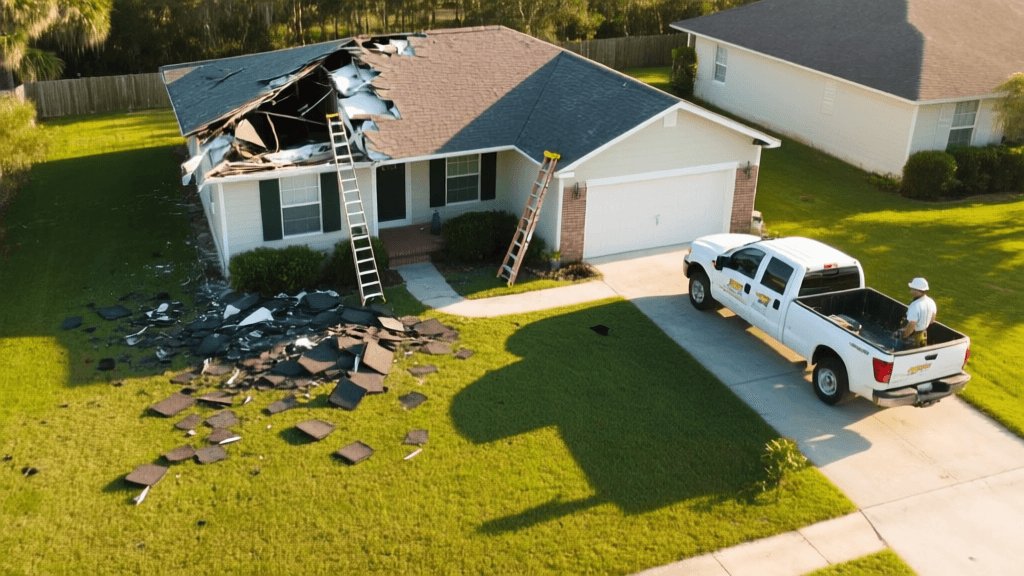
After a storm, prioritize safety and prevent further damage without climbing onto a wet or unstable roof. Take dated photos or video from the ground and from safe interior locations, including ceilings, attic areas that can be reached safely, and visible exterior damage. Record when the damage appeared, weather conditions, temporary protective work, and conversations with contractors or the insurer. Save receipts for reasonable emergency measures, such as tarping, while avoiding permanent repairs beyond what is needed to protect the home until the claim process is understood. Keep damaged materials or samples when practical and safe. Organized records can help clarify the timeline and separate new storm damage from older wear or previous repairs.
What to Expect During the Roof Claim Process
Report suspected damage promptly using the insurer’s stated claim process, and ask what documents and deadlines apply. An adjuster may inspect the property and prepare an estimate; the homeowner can also obtain a qualified roofing contractor’s assessment for comparison. Estimates can differ because they may describe different damage, quantities, materials, or code-related work. Review each line item rather than comparing only the total. If something appears missing, provide supporting photographs, measurements, invoices, or a written explanation and ask how the insurer evaluated it. Avoid signing over claim benefits or accepting high-pressure promises about guaranteed claim outcomes. Coverage decisions are governed by the policy and the facts of the loss, not by a contractor’s prediction.
Galveston’s Coastal Conditions Make Preparation Useful
Galveston homes face coastal weather patterns that can bring strong winds, intense rain, and occasional hail, while salt air and humidity can contribute to ongoing exterior wear. Neighborhood exposure varies with location, building design, roof shape, and maintenance history, so one homeowner’s experience should not be treated as a coverage rule for another. Residents in nearby Texas City, La Marque, Hitchcock, and League City may also encounter storm-related roof concerns, but policy terms and property conditions remain individual. Before hurricane season, note the roof’s approximate installation year, inspect visible flashing and drainage from safe locations, and arrange professional maintenance when appropriate. Routine upkeep can help identify problems early, though it does not guarantee a claim will be covered.
Key Takeaways for Homeowners
A Practical Roof Claim Checklist
- Confirm whether the policy settles covered roof damage at replacement cost, actual cash value, or under a roof-specific schedule, and identify any endorsements that change the terms.
- Check the windstorm or named-storm deductible and understand how its amount is calculated before a loss occurs.
- Keep records of roof age, installation, maintenance, prior repairs, and pre-storm condition, with dated photographs when available.
- After damage, document what you can safely see, report the loss promptly, and retain receipts for reasonable temporary protection.
- Compare repair estimates by scope and supporting details, and ask the insurer to explain any disputed or unclear line items.

Next Steps Before or After a Roof Loss
If no damage has occurred, gather the current policy, declarations, endorsements, roof installation records, and recent inspection or repair documents. Ask the insurer or a qualified insurance professional to clarify roof settlement provisions, deductible triggers, and what documentation is needed if replacement-cost benefits are available. If damage has occurred, protect people first, take safe photos, report the claim, and follow instructions about inspections and temporary repairs. Keep a dated record of estimates, payments, questions, and responses. Homeowners in Galveston and surrounding coastal communities should avoid assuming that a policy label guarantees a particular payout; the actual contract and claim facts determine the result. A careful review can help set realistic expectations and support sound repair decisions.
Review Your Roof Coverage Before the Next Storm
Gather your policy and roof records, then ask how settlement terms, deductibles, and claim documentation apply to your home.
Get a Free Quote